House Clearance Blackfriars — Recycling and Sustainability Commitment
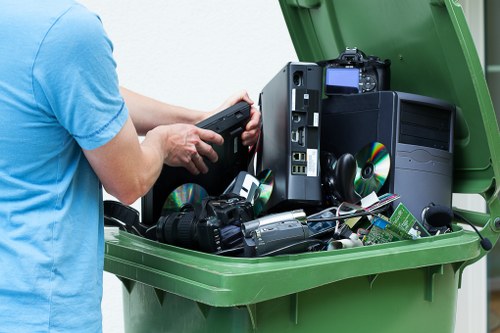 At House Clearance Blackfriars we prioritise eco-friendly waste disposal and sustainable rubbish removal across the Blackfriars area. Our approach to clearing properties balances speed with environmental responsibility, ensuring that every house clearance or Blackfriars house clearance job maximises diversion from landfill. We work to reduce the carbon footprint of each visit by combining careful sorting on-site with partnerships and transport solutions that favour low emissions.
We set clear, measurable targets to make our sustainability promises real. Our core aim is a community-focused, circular approach: repair, reuse, recycle. That means we separate electronics, textiles, furniture, metals, paper and glass wherever possible and route items to reuse streams before considering recycling. This practical approach to house clearances in Blackfriars reduces waste and supports local social enterprises.
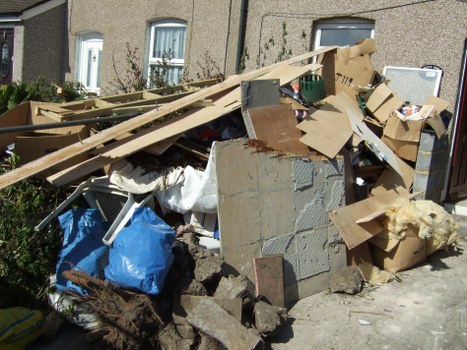 The team is trained to follow borough guidance on waste separation: dry recyclables, glass, paper, plastics, metals and organics are segregated when accessible, reflecting the boroughs' approach to improving recycling rates. As a result, our crews can prepare large loads that are ready for transfer stations and charity partners, cutting handling time and lowering processing emissions.
Recycling Targets and Performance
We have adopted an ambitious recycling percentage target: our operational goal is to achieve a minimum 70% recycling and reuse rate across all clearances in the Blackfriars catchment within the next 12 months, with a long-term aim of 85% on suitable projects. These targets include items reclaimed for direct reuse, donations to charities, and materials sent for high-quality recycling.
To meet these targets we audit each clearance and track outcomes. Typical diversion streams include:
- Functional furniture and household items to local charities and reuse networks
- Electrics and WEEE to accredited recycling centres
- Paper, cardboard, glass and metals to borough transfer stations for sorting
 Our measurement includes Blackfriars house-clearance service jobs as well as small commercial clear-outs nearby, so our sustainability work scales with demand and helps boroughs meet their waste reduction objectives.
Local Transfer Stations and Circular Routes
We use the network of local transfer stations and recycling hubs operated by neighbouring boroughs to ensure materials are processed correctly. Examples include Southwark and Westminster transfer stations and the City of London recycling hubs, which accept segregated loads from licensed carriers. By consolidating sorted materials into fewer trips we reduce vehicle miles and improve processing efficiency.
Our logistics planning emphasises consolidation and timing: loads are scheduled to avoid peak traffic and to match transfer station opening windows. This reduces idling and contributes to a lower overall environmental impact for each clearance. In addition, items destined for specialist recyclers — like WEEE and hazardous textiles — are labelled and routed to accredited facilities to ensure compliant, low-impact handling.
We also maintain a list of local reclaim and reuse depots, enabling quicker rehoming of items that still have useful life. That practical reuse channel is a vital part of the Blackfriars area sustainability picture.
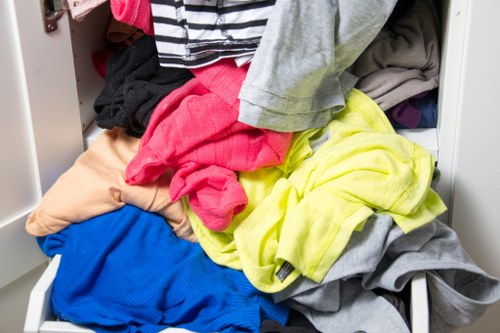 Charity partnerships are a core component of our sustainable model. We work with established organisations including Emmaus, British Heart Foundation, Age UK and local community projects to donate furniture, textiles and working appliances. Where items cannot be reused directly, we support social enterprises that repair and refurbish goods for resale, creating jobs and extending product lifecycles.
These collaborations are structured and audited: items are logged, condition is recorded, and destination partners confirm reception. This ensures transparency and accountability while maximising the social and environmental benefits of each donation. We prioritise local redistribution so that items remain in the community, reducing transport impacts and supporting residents in need.
 Low-carbon vans and greener transport are essential to our sustainability promise. Our fleet includes modern Euro 6 diesel vehicles, hybrids and an increasing number of electric vans for inner-city runs. Using low-carbon vans for short hops in the Blackfriars area, plus cargo bikes for very small loads where feasible, cuts CO2 emissions and improves air quality in the city centre.
Operational practices complement vehicle upgrades: drivers are trained in eco-driving techniques, routes are optimised with software to minimise mileage, and we coordinate multi-stop collections to reduce duplicated journeys. This contributes to a lower carbon footprint for each clearance and aligns with citywide sustainability ambitions.
Transparency is important to us. We compile internal monthly reports showing recycling percentages, tonnes diverted, donations made and vehicle emissions. These metrics guide continuous improvement and inform strategic investments in electric vehicles and reuse infrastructure.
House Clearance Blackfriars is committed to evolving with local policy and technological advances. Whether you require a single-room clearance or a whole-property service, we aim to deliver efficient, compliant and environmentally responsible solutions that support the circular economy in Blackfriars and surrounding boroughs.
We welcome collaboration with community schemes and local authorities to expand reuse networks and enhance transfer station efficiency. By combining thoughtful on-site sorting, strong charity partnerships, and a fleet designed for low emissions, our house clearance teams make a measurable contribution to sustainable waste management in Blackfriars.
Choosing an eco-conscious Blackfriars house clearance provider means choosing lower landfill impact, stronger community support and fewer vehicle emissions — a practical way to make every clearance count for the environment.
Our commitment is to continual improvement: higher recycling rates, more donations to charities, and an expanding low-carbon fleet so that house clearances truly support a greener Blackfriars.